
Rural municipalities need an operating layer.
Local services, producers, events, social support, tourism, routes, people, and places already exist. The failure is that they are scattered across Facebook, municipal PDFs, noticeboards, word of mouth, and foreign platforms. We are building the reusable digital layer that makes local life visible, usable, measurable, and economically stronger.
The first parish implementation.
The local shelf for Häädemeeste: food, wood, announcements, services, events, and the map of what is nearby.
Live proofReusable for other parishes.
A packaged municipal layer for discovery, participation, local commerce, tourism capture, and decision data.
Built to travelSame country. Different price tag on your life.
You already know you earn less. Here's what nobody talks about.. you also pay more. For everything. Every week. And there's no alternative.
What Tallinn never has to think about
They get free transport. You pay €3,000 in fuel.
In the city, competition keeps prices honest. Here, one shelf often sets the terms.
They walk to the clinic. You drive 40 minutes and lose half a workday.
Nobody calls this a tax. But you pay it every month. Every month. Same country.
The cost-of-living story leaves out distance. Out here, distance sends its own invoice.
From a city, this is easy to wave away.
"You chose to live there."
Maybe. But that answer does not make the cost disappear. It just makes the person paying it sound like the problem.
From a city, this is easy to wave away.
"You chose to live there."
Maybe. But that answer does not make the cost disappear. It just keeps the design problem out of view.
I reject that.
I refuse to accept that our kids should grow up permanently branded as lesser. Country plebs. That because we live out here we should just take it.. pay more, earn less, and be grateful for scraps.
Where did everybody's agency go? When did we all just.. surrender to the idea that this is how it is out here?
If you can't even admit the real situation.. if you've accepted that living in a backwater means living with sub-standards.. you're never going to think about the possibility that things could be different.
I don't believe we need to catch up. I believe we can leapfrog.
Bloat. Infrastructure built around office jobs that AI is making redundant as we speak. Mostly consumption.. managing consumers who create very little. Job security that suddenly isn't looking so secure.
Resources. Space. Land. Clean air. Food in the ground. Timber in the forest. Room to build. We can skip every error they made fumbling forward through decades of trial and error. Better systems. More efficient. Built right the first time.
We hold so many cards out here. But if you've surrendered to the idea that you're stuck in a backwater.. you'll never even look at your hand.
Here's where the money goes.
€45 million moves through this parish every year. Salaries, pensions, spending. €6.4 million stays. The rest disappears into supply chains and platforms that don't know this place exists.
The state sends €11 million a year in pensions alone. Almost all of it is gone within days. Coop. Maxima. Circle K. Out of the parish before the month turns.
That pension money draining to chains is nearly double what every school here runs on. Your parents worked decades for that. It arrives in their account and leaves the same week.. to a boardroom that doesn't know this place exists.
The flag on the pole says independence. The receipt says colony.
that's one parish. now zoom out.
The fastest pipes in Europe.. carrying everything out.
A Danish worker earns 3x what an Estonian earns. A Finnish worker earns 2x. Same region. Same EU. Same digital economy.
Norway's GDP per capita is €85,000. Estonia's is €31,000. But we watch the same Netflix. Stream the same Spotify. Click the same Google ads. Same prices.. one-third the income.
Norway doesn't lose sleep over leakage. Denmark can absorb it. But rural Estonia — lowest salaries, highest costs, every euro doing the work of three — sends the highest percentage of its money straight out of the economy.
Estonia just celebrated 108 years of independence. 79% of online spending leaves. The trade deficit is €3.3 billion. A third of the economy is controlled by Nordic banks.
Political independence is not the same as economic resilience. The receipts still point outward.
that's the country. now zoom back in.
where does your money actually go?
Follow one salary through the parish.
€45 million moves through this parish every year. 86% leaves the same day. Here's why. Pärnu county median. €1,400 gross. Follow every euro.
That €28 is the local wages Coop and Circle K pay their staff to serve you. That's the only money from your entire salary that touches the local economy.
Everything else was spoken for before you made a single choice.
The Coop cashier takes it home. Buys fuel. Groceries. Pays electricity. Same exits. Same loop. Same drain.
95% of it leaves the parish within a week.
Multiply by 2,000 households. That's your parish economy.
This is not a local economy.
This is a checkout lane for other people's businesses.
Rural isn't failing by accident. It is doing exactly what the current systems taught it to do.
so how did we programme it this way?
A country this small, this far behind.. you had to think different. Less bureaucracy. Faster innovation. Leapfrog the old systems entirely.
So Estonia built the most advanced digital infrastructure in Europe. Digital ID. e-governance. Instant payments. The fastest pipes on the continent.
It worked. The world noticed. "The most digital country on earth."
But the DNA was wrong from the start.
Every pipe pointed outward. Every integration connected us to platforms that extract. The faster the pipes got.. the faster the money left.
Estonia built the most advanced digital infrastructure in Europe. Digital ID. e-governance. Instant payments. The fastest pipes on the continent.
But every pipe pointed outward. Every integration connected us to platforms that extract. The faster the pipes got.. the faster the money left.
We didn't build infrastructure. We built an accelerant.
Sweden has a domestic gaming industry worth €4 billion. Their music exports are the third-largest in the world. They have the domestic market to absorb the outflow.
We are not Sweden. We are not Norway. We don't have excess to spare.
that's the money leaving. but before the money left.. your attention did.
The money follows the mind.. and the mind already left.
You can find local content. You can sort Facebook chronologically. You won't. They designed the easier option to win. So we need a local one that is easier.
The money follows the mind.. and the mind already left.
Before you spend a euro, you spend an hour. And those hours left the parish the same way the money did — quietly. Not because you chose to leave. Because staying was never made easy.
The path to Netflix is frictionless. The path to what your neighbour is selling doesn't exist. That's not an accident. One path had billions of euros behind it. The other had nobody.
You can find local content. You can sort Facebook chronologically. You won't. Not because you don't care. Because the easier option was designed to win — and nobody designed a local one.
A girl in our parish makes folk music.
She studied. She practiced. She put it online.
She stopped making music.
We gave them our attention.. they kept it.
Every municipality. Every village association. Every sports club. Every local business in this parish is on Facebook. It's how we announce events, share news, organise community life.
Hours every week creating content, posting updates, trying to reach our own neighbours. The pattern is always the same.. build the audience, then charge you to reach them.
We gave them our attention.. they kept it.
Every local business, every village association, every sports club here is on Facebook. Hours every week trying to reach our own neighbours. The trap is always the same.. build the audience, then pay to reach the people who already asked to hear from you.
A fisherman posts that fresh fish is available at the harbour.
A business here with 200 local followers reaches
When local life depends on foreign feeds, too much disappears before neighbours ever see it.
That is not a community strategy. That is a leak.
this isn't decline.. it's a countdown.
The OECD published a report on this.. they titled it "Shrinking Smartly." The government's official strategy is not to reverse the decline. It's to manage it.. consolidate services.. merge municipalities.. make the numbers work on paper while the places themselves empty out.
their plan is managed decline.
Right now, leaving is the rational advice.
Tallinn first. Abroad next. A local future should not be the risky choice.
until we fix this.
so what does it look like when the money stays?
what if we kept a little more of it here?
you saw the receipt. €1,400 in.. €1.40 circulates.
local spending circulates 3-4 times before it leaves.. chain spending disappears the same day.
how this works →
that's the multiplier. it's what happens when money has somewhere to go next. the difference between 1x and 3.5x is whether the euro has somewhere to go.
10% shift = €4M staying local. With 3.5x multiplier = €14M in local activity.
remember the invisible tax? one grocery chain sets the price because there's no competition. one employer sets the wage because there's no alternative. circulation creates competition. competition is the rural tax in reverse.
that's the math. now.. what it looks like.
we're not poor. we're poorly organised.
THE GOAL
shift 10% of local spending back into the parish.
that's €5 million more circulating here every year.
more local spending means more reasons to sell here. more businesses means more reasons to stay here. more residents means more customers. that's the loop. one product at a time. make the local option easier than leaving.
your neighbour's eggs at your door
drive 20 min to Pärnu. park. shop. drive back. burn €5 in fuel for a €3 carton.
open app. tap. eggs from 2 km away. fresher. cheaper. zero fuel.
one order. delivered. sorted.
call three sawmills. compare prices from memory. arrange transport yourself. hope it's dry.
one listing. price, specs, delivery, all there. order. done.
fresh catch. 100% reach.
fisherman posts on Facebook. 3% see it. fresh protein sold to middleman or spoils.
catch lands. announce once. everyone who wants fish gets notified. sold out in an hour. caught 5 km away.
Nobody stops.
We are the southernmost parish on the busiest corridor in the country. Denmark, Germany, Holland, Poland, Lithuania, Latvia.. anyone driving north through Europe comes through here. Six to seven thousand people every day. More in summer.
This is the front door of Estonia. Right now most people meet us at a petrol station.
Of that fraction — most stop at Circle K. Fuel up. Coffee. Gone. Money in, money straight back out. Circle K sends 85-90% of every transaction out of the local economy — to corporate, to supply chains, to shareholders abroad.
No billboard invites them to turn off the highway. No app tells them what's 2 kilometres down the road. The highest volume of visitors in the country.. driving past us without a wave.
Drive through. Keep going.
- Driver enters Estonia on E67
- Through Häädemeeste at 90 km/h
- Maybe Circle K for fuel
- Spends €50-100: coffee, petrol, snack
- 85-90% of that leaves the parish immediately
- Gone.
Stop. Look around. Stay.
- Driver enters Estonia — app suggests a detour
- Stops at a local cafe in Häädemeeste
- Finds the Rannametsa bog trail
- Takes the scenic route through Uulu
- Stays a night. Then two.
- Spends €500-1,000: food, lodging, experiences
The numbers are so low that even small changes hit hard. Shift from 1% stopping to 2%, and that doubles the visitors. Redirect half from Circle K to a local business, and the money has a reason to stay.
Give people a reason to turn off the highway. Then show them exactly what's here. Arithmetic.
We don't need to invent demand. 4.4 million people are already passing through.. we need to stop hiding the shelf.
The proof is already live.
Everything above is the same failure with different clothes: what's here is invisible. The producers, the trails, the guesthouses, the food, the forests — all of it exists. None of it is findable. Not by the 4.4 million driving past. Not even by the people who live here.
So we built the first shelf. Not a listing. Not a directory. A map you want to open. This is what a resident, visitor, producer, or official can open when they need to see what is actually here. Your farm. Your guesthouse. Your sawmill. Your route. If you're on it.
No algorithm deciding the public layer.
If something is genuinely local and useful, visibility should not depend on whether a foreign feed likes it today.
The place explains itself.
A resident looks for help. A visitor looks for a reason to stop. A parish looks for gaps. The same layer can serve all three.
See the empty spaces?
That is where the next service, supplier, route, grant, or business case goes.
The countryside had the goods. It never had the operating layer.
Robert Aaron
Norris
From Australia. 13 years in the forests of southwest Estonia..
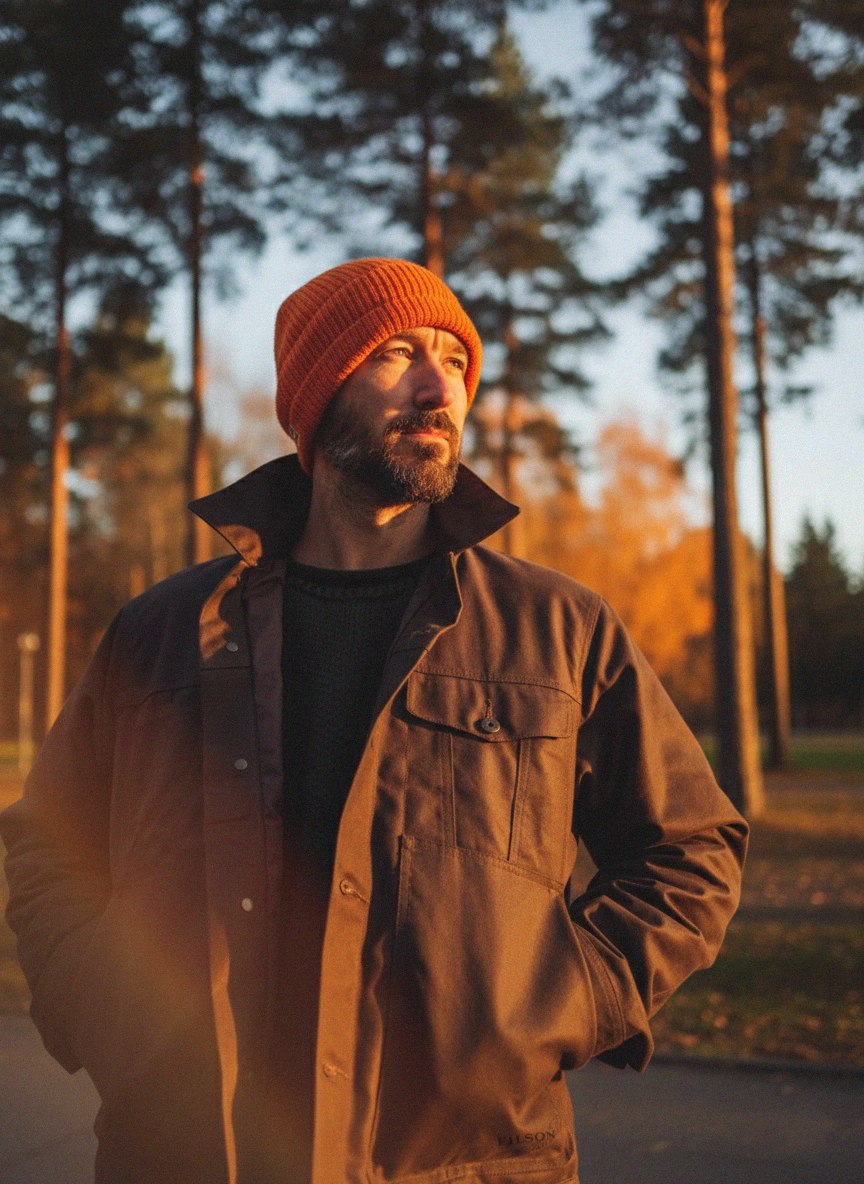
Last year I started taking my boy to school here. We'd just come back from Denmark.. a few days driving through rural towns there. Nothing magical. Just maintained roads, villages alive, services where families actually are. Then I came home, sat outside the school here, and the thought landed.
How do I tell my boys their future is safe here?
Because I love this place. That's the problem. We built our home here over a decade. Blood, mud, mistakes, laughter, all of it. Some of the best moments of my life are in these forests.
But love does not beat arithmetic. The data, the trend, the -41.7%, the managed decline language.. it all pointed at the same thing: maybe I had invested everything into a place my own children would have to leave.
That was the sick feeling. Not that things are hard. Hard is fine. The sick part was realising the decline had been accepted. Named. Managed. Turned into policy language.
And look, I'm an Australian. 13 years in these forests. My Estonian is still not good enough. I'm very aware how ridiculous it is that I'm the one saying this.
But I live here. My kids live here. The invoice lands here.
Some things are above this page: taxes, national policy, energy prices, municipal structure.
But some things are not. Where we spend. What gets surfaced. Who gets seen. Whether local value gets one more chance before it leaves.
Right now almost everything points outward.
So build one thing that points inward. Then another. Then another.
Many of these kids will leave if staying keeps looking like the risky option.
No. Not if I can help it.
This country digitised government before anyone thought it was possible. Now point that competence at the countryside.
If it works in one parish,
it should not stay in one parish.
Häädemeeste is not the whole market. It is the proving ground.
The same pattern exists across Estonia and across the Nordic and Baltic countryside: useful local things exist, but they are not indexed, not trusted by default, not easy to buy, and not visible at the moment someone needs them.
A parish should not have to buy a generic tourism portal, a separate events calendar, a separate producer directory, a separate social support page, and a separate data project. It needs one local operating layer that can be adapted, measured, and reused.
The business model is not charging residents. The business model is licensing the infrastructure to places that need it.
That is how the local layer stays free for users, how the first parish can turn proof into leverage, and how a small rural pilot becomes exportable infrastructure.
Four reusable local systems. First proven in one parish.
In a parish of 5,000 people.. ~100 joined the founding crew. Nobody paid them. Nobody ran an ad campaign. So this is not a pitch deck. It is already a working local proof.
Local supply loops.
Eggs from 2 km. Fish from the harbour. Bread from the village. A parish economy gets stronger when nearby supply is easy to find.
Resident and producer layerResource exchange.
Lumber. Logs. Firewood. Services. One visible place for local capacity, price, specs, delivery, and repeat demand.
Local commerce layerThe visitor front door.
4.4 million drive past every year. Routes, stays, food, events, and reasons to stop before attention and money leave.
Tourism capture layerThe public operating layer.
Events, services, support, contacts, gaps, and civic information in a form residents can use and officials can measure.
Municipal decision layerThe local user experience stays simple. The municipal value is the system underneath it.
Bring the local operating layer
to the next parish.
hei@robertaaron.netIf you work with a parish that needs this, forward it to one person who can open the next door.